
How to Go Whale Watching in Vancouver
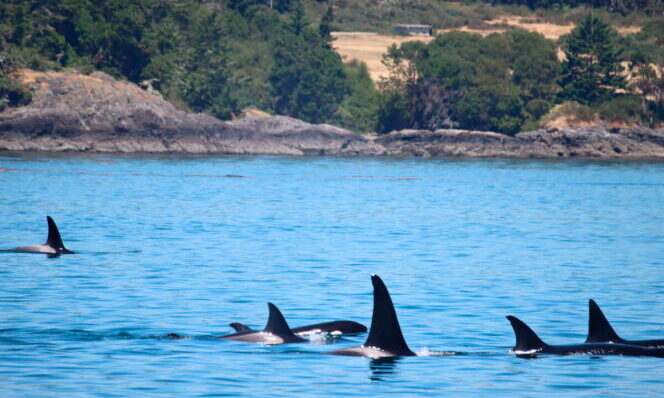
A pod of orcas. Photo: Destination Vancouver/Prince of Whales Whale Watching
With thousands of whales migrating through its waters and several pods of resident orcas, Vancouver is one of the best places to go whale watching.
When is Whale Watching Season?
You can see whales in Vancouver between March and October. The whales follow their prey around the region so there is no “best” time of day or month to go during the season. Tour operators use radios to communicate with each other and with spotters to help find the best wildlife sighting locations each day. Each day on the water is different since the whales go where they please.
Which Whales (and Marine Animals) Can You See?
Most visitors come to see the famous orcas (killer whales). Three pods of salmon-eating orcas, known as the Southern Residents, live in the Salish Sea off the coast of Vancouver. With only 74 whales remaining, this group is considered endangered. But you can also see transient killer whales, known as Biggs orcas. These whales live in smaller groups and hunt seals.
Orcas. Photo: Destination Vancouver/Prince of Whales Whale Watching
Humpback whales also migrate past Vancouver in the spring and fall on their way to and from their winter feeding grounds in Mexico and their summer hangout in Alaska. But some humpbacks hang around Vancouver all year. While they are less common, it’s also possible to spot grey whales and minke whales.
Humpback whale. Photo: Destination Vancouver/Prince of Whales Whale Watching
And even if the whales don’t show up, you can still see lots of marine life. Curious seals and sea lions lounge on rocks. River otters and mink frolick across rocky shorelines. Pacific white-sided dolphins and porpoises dance through the waves in huge pods. Bald eagles perch on treetops. And rafts of surf scoters and other sea ducks bob in the waves.
Curious harbour seals. Photo: Destination Vancouver/Prince of Whales Whale Watching
How to Go Whale Watching Responsibly
Vancouver’s whale watching tour operators focus on marine education, conservation, and responsible viewing. On-board guides help guests learn about the wildlife they are seeing as well as the surrounding ecosytem. Some tour companies also donate a portion of their proceeds to conservation organizations that work to preserve marine life.
Whale watching companies in BC helped to pioneer responsible whale watching standards to minimize negative effects on the whales. These include guidelines for minimum distances, reduced boat speeds, and engine shut-offs or idling when whales are in the area. The Canadian government formally adopted these standards into the federal Marine Mammal Regulations in 2018 to ensure whales and other marine mammals are treated responsibly and with respect.
Infographic from Fisheries and Oceans Canada.
How to Choose a Vancouver Whale Watching Tour
There are lots of options for whale watching tours. If you want an adventure, choose a small inflatable Zodiac tour. You’ll get to experience the elements in an open boat that is fast and can go places that bigger boats can’t go. These boats only take small groups so they provide a more intimate view of the wildlife and a smaller guest-to guide-ratio.
A small, open zodiac tour. Photo: Destination Vancouver/Prince of Whales Whale Watching
If you prefer a boat with both indoor and outdoor viewing areas, book a tour on a larger boat. In general, the larger the boat, the more stable and comfortable the ride. Some companies use catamarans, which are the most stable. The downside is that the bigger boats are slower so you might not be able to get to as many locations.
A large and stable catamaran tour. Photo: Destination Vancouver/Prince of Whales Whale Watching
You can book with Wild Whales Vancouver or Prince of Whales, both of which launch at Granville Island in Vancouver. Or start your trip from Richmond’s Steveston neighbourhood south of Vancouver with Vancouver Whale Watch or Seabreeze Adventures. They both provide a complimentary shuttle from downtown Vancouver.
You can also go whale watching from Victoria. Eagle Wing Whale & Wildlife Tours, Orca Spirit Adventures, and Prince of Whales all offer tours that include a seaplane trip to and from Vancouver as well as whale watching in Victoria.
What to Bring Whale Watching
It can get chilly and wet on the water, so wear pants, bring a warm layer (like a fleece) and a rain jacket. It can also get pretty bright, so pack sunglasses, a hat, and sunscreen. If you’re taking a small, open boat, the tour operator will give you waterproof gear.
Photo: Destination Vancouver/Kate Milford
You’ll also want to bring a camera to capture photos of this amazing experience. Pack a waterproof dry bag to protect your camera on small boat tours. Some tour operators may have dry bags to lend if you don’t have your own. Leave your drone at home. The buzz and proximity of the drones aggravates the whales and flying a drone near whales is illegal. Most tour companies have binoculars you can borrow, but bringing your own is also a great idea.
While tour operators will do their best to keep you out of high winds and rough seas, and tour boats are designed to be comfortable and stable, the Pacific Ocean does what it wants. Most people don’t experience sea sickness, especially if they spend time outside in the fresh air. If you are concerned about sea sickness, bring motion sickness medication just in case.
Most tours are three to five hours long so you might want to pack snacks, water, or a light lunch. Some tours include snacks – check when you book.
Other Ways to Get Out on the Water and See Whales
While taking a whale watching tour greatly increases your chance of seeing these huge creatures, it’s possible to encounter whales anytime you’re out on the water around Vancouver. Seeing whales on a kayak tour is a real treat. You might also get lucky and see whales, seals, and other marine life while on a snorkeling or SCUBA diving tour. You can also see whales if you rent your own boat. Just remember to keep responsible whale watching guidelines in mind and stay a safe distance from the whales.
A group of kayakers paddle down False Creek. Photo: Destination Vancouver/Kindred & Scout